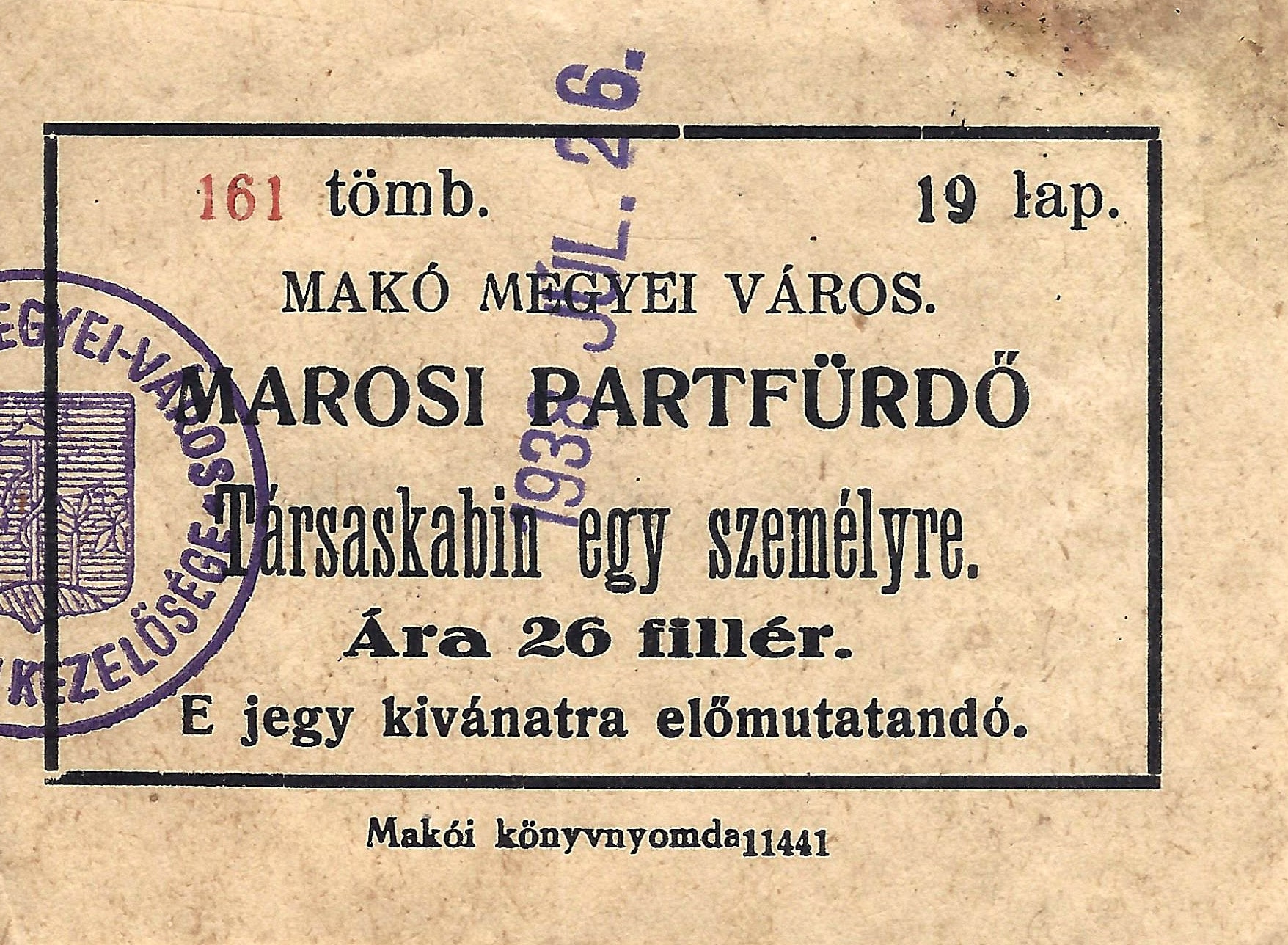
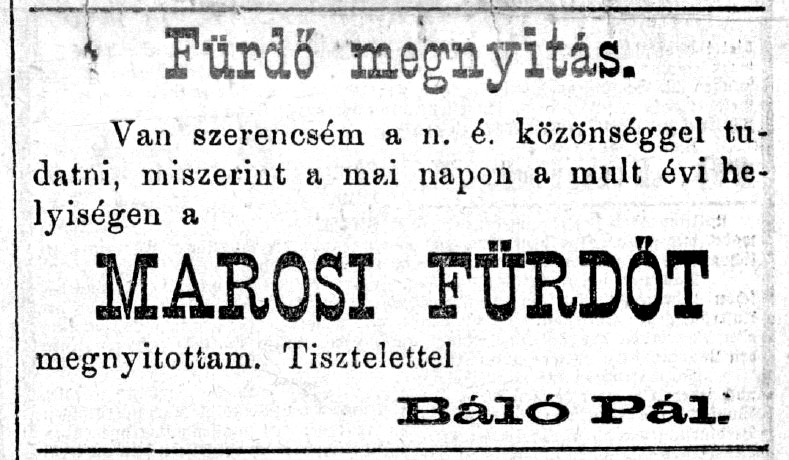
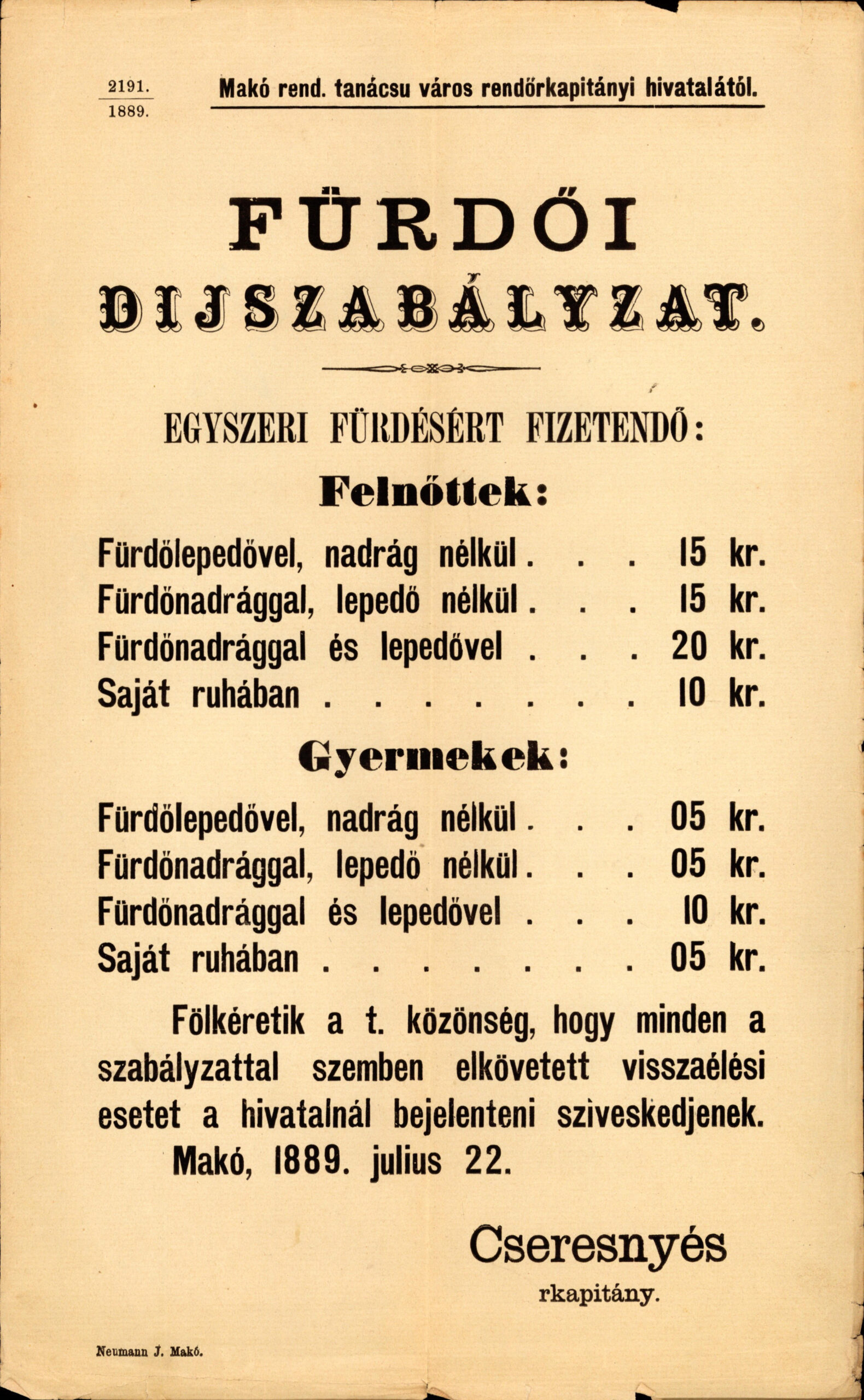
Makó’s bathing culture was shaped by the proximity of the Maros River. The first wooden bathhouse was built on the Maros in the 1850s. Open-air river bathing began in 1892 on the site of today’s beach, in the area known as Lúdvár, and has continued ever since. This was the first river beach of historic Hungary. Until the flood of 1970, the beach—with its wide sandy shore and century-old trees—was the most popular recreational spot for the people of Makó. Today, thanks to tourism development, it attracts an increasing number of visitors.
The largest bathhouse was built in 1912, designed by the city’s chief engineer, Andor Németh. As the river near the Makó bank was still very shallow at that time, the bathhouse was moored closer to the opposite Kiszombor bank. To ensure safe access to the large wooden structure, it was connected to the shore by a 138-meter pontoon bridge. Since mixed bathing was not allowed, separate areas were designated for men and women. The pools, surrounded by changing cabins, had basket bottoms—meaning their bases were planked, and water flowed through from the upstream side. At the end of each season, the bathhouse had to be dismantled and pulled ashore to protect it from ice drift.
An interesting fact: men and women were also separated on the 138-meter-long bridge. Not only were the sides of the walkway fenced off, but a partition also ran down the middle so that men and women in swimsuits could not see each other. In local folklore, this passage quickly became known as the “Bridge of Sighs.”
Makó Beach