Bus stop
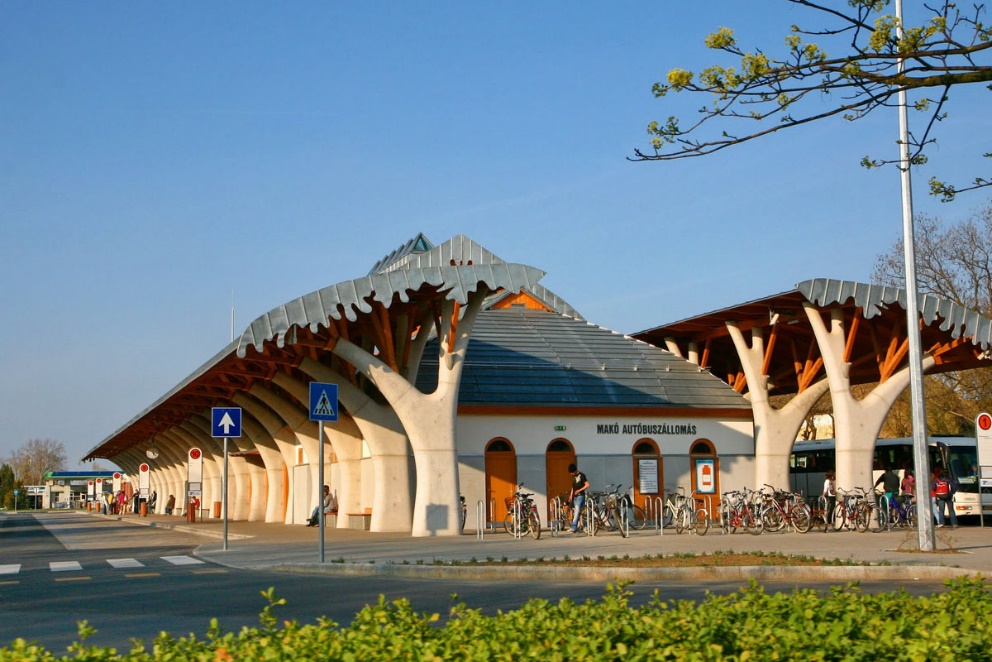
The Makó bus station is located in Csanád vezér Square and is administered by Volánbusz. It was originally built in 1978; in place of the old building, which was in a deteriorated state and had no particular aesthetic value, a new organic-style bus terminal was constructed in 2010 based on the designs of Imre Makovecz, utilizing the foundation walls of the previous structure.
The waiting hall of the terminal is spacious and bright, thanks to the large glass surfaces; the wooden frames of the windows feature motifs of architecture characterized by the use of natural light. The building features a modern passenger information system and rest areas for drivers. The most striking elements of the Makovecz bus station are the monolithic concrete support columns, which were cast on-site; each column required 10 cubic meters of concrete and took two days to set. Each column weighs 7.8 tons, with a total of 44 positioned on both sides of the building. Instead of the previous sawtooth alignment, buses can now circulate around the station following the renovation. As cycling is the dominant mode of transportation in the city, a large number of new bicycle storage facilities have been installed at the renovated bus terminal.